1. How does Ishmaelle’s decision to disguise herself as a boy shape her interactions aboard the Nimrod and influence her sense of self? What does this secret teach her about her cohort, her antagonists and friends, and the male-dominated world of whale hunting? How does it deepen our understanding of the story as a feminist retelling?
2. In what ways does our hero’s shift—from Ishmaelle to Ishmael and back to Ishmaelle again—mirror her journey with queerness, identity, and gender nonconformity? How does she, like the whale’s symbolic yin and yang, come to find harmony both with the natural world and with her own deft subversion of gender norms?
3. Call Me Ishmaelle draws inspiration from a few real-life characters—namely Anne Jane Thornton, a nineteenth-century sailor who, like Ishmaelle, disguised herself as a boy, and Absalom Boston, one of the first Black captains in history. Likewise, Melville himself drew inspiration from Mocha Dick, a real-life albino whale killed in the 1830s. Discuss the rich lives of these historical figures. How do they overlap with and diverge from Ishmaelle and Seneca? How does your knowledge of their historical counterparts change or influence the way you think about the Nimrod’s sailors? Is Guo’s whale the same as Moby Dick?
4. Call Me Ishmaelle is described by Philip Hoare as a brave and ambitious “reordering of Moby Dick.” In what ways does Guo’s retelling adhere closely to Melville’s original story and cast of characters, and in what ways does it diverge? Discuss how we might view Call Me Ishmaelle through a postcolonial lens. How does this modern interpretation expand our idea of what a contemporary novel can be?
5. Call Me Ishmaelle begins with Moby Dick’s iconic opening line, though with a key difference. Discuss the significance of this difference as well as the use of direct address.
6. How does the opening line simultaneously anchor and destabilize our understanding of not only Ishmaelle but traditional narrators in general? How does it subvert the trope of the unreliable narrator?
7. The novel opens with a powerful epigraph from the Tao Te Ching. How does our interpretation of the epigraph change as Ishmaelle delves further into her journey at sea? How does it inform our understanding of Muzi’s relationship with Ishmaelle, Captain Seneca, and others aboard the Nimrod?
8. While many of the characters aboard the Nimrod are deeply nuanced reiterations of Moby Dick’s original cast—Seneca as the obsessive Ahab and Kauri as Melville’s Queequeg—Muzi’s counterpart is harder to pin down. Who, or what, might Muzi resemble from Moby Dick, and how does this enliven Guo’s reimagining? How does it reinvigorate our understanding of the epic?
9. Early on in the book, Ishmaelle says: “I had toyed with fate, and disaster came” (5). Discuss the idea of fate as a theme throughout Call Me Ishmaelle. How does the simultaneous fear and yearning for fate both transform and incite Seneca’s grief? How does it change Ishmaelle’s journey and drive her inevitable return to Saxonham?
10. When Ishmaelle is born, we learn that “a great flock of seagulls hovered above [her family’s] roof” after a great storm (3). Later, aboard her first ship, Ishmaelle sees an albatross, and she learns that the other sailors view this as a curse. Toward the end of her journey, Seneca orders Ishmaelle to shoot the albatross that flies above the Nimrod. Discuss what the repeated image of the albatross comes to represent by the end of Call Me Ishmaelle. Is the albatross a harbinger of fate, like the flock of seagulls during Ishmaelle’s birth? Mr. Hawthorne believes the albatross is simply looking for its lifelong mate. How do the respective interpretations of this bird characterize the ship’s whalers?
11. Melville’s Moby Dick has a famously digressive style, while Ishmaelle’s narration throughout Guo’s novel is often unadorned; the language is strikingly direct. Discuss how the simplicity of the prose amplifies the world of the book. How does it better illustrate Ishmaelle’s rich inner life as well as the evocative power of the world around her?
12. Similarly, how might the author’s background as a filmmaker inform the novel’s vivid but plainspoken descriptions and characters?
13. After Ishmaelle sets out to sea, she observes a “lone engraving” on the ship, noting its stark symbolic power (123). “Two figures, one bright in the sky, the other dark and in the depths of a sea, seemed engaged in combat. The bright figure had a long beard and a stern countenance, his right hand was raised and his index finger pointed upwards, while from his left hand blazed downward a terrifying bolt of lightning . . . The Lord God smiting the devil, and conquering evil, I thought to myself” (123-124). How does this interpretation reflect Ishmaelle’s understanding of the new world and her new life ahead? How might this change by the end?
14. On page 132, we learn that Aunt Gladys believed “we are all half-woman half-man.” We know that Aunt Gladys also possessed a figurine depicting this. Later on, Ishmaelle comes to define herself this way. “There I had been, a man then a woman,” she says (418). She describes it as “a dangerous mix of possibilities.” How does this fluidity change Ishmaelle’s view of her whaling cohort? How does it deepen her connection to the whale, who ultimately spares her life?
15. Captain Seneca’s background is revealed to us piecemeal throughout the novel. How does this gradual unveiling of information mirror the experience of sublimated grief? How does it affect our understanding of not just Seneca but of the structure, pacing, and tension of the overarching narrative?
16. There are many examples of formal inventiveness in Call Me Ishmaelle, the most notable of which can be found in Seneca’s sections, where he often addresses the whale directly in a free-flowing and tormented style. What does the lack of punctuation achieve in these moments? How does Guo’s shift in tone here provide insight into Seneca’s motivation and need for revenge?
17. On page 182, Ishmaelle dreams a whale’s dream. Later, on page 208, Ishmaelle strongly identifies with a dead whale and its baby. Later still, Ishmaelle has a harrowing final encounter with the whale, and on page 426, she says: “I had looked into your eye, after all that death and wreckage, and I knew we were entwined. Your eye, wise, old and true, beyond words, had remained with me.” Discuss the evolution of this defining relationship as well as the parallels between the brutality of whale hunting and all that Ishmaelle endures aboard the Nimrod.
18. In the novel’s final movements, the chapters take on a polyphonic structure, where Seneca’s monologues overlap with Ishmaelle’s voice, and later the whale’s. All three voices finally converge on page 407—a section titled “Trio.” How does this mirror the Book of Changes, and the discussion of foundational Eastern texts throughout?
19. Call Me Ishmaelle is firmly rooted in realism but still contains many mystical elements—the seagulls; the power of Ishmaelle and Kauri’s idols; the wooden seahorse after it’s broken in two; the storied danger of picking dead man’s bells. How do these mystical elements shape Ishmaelle’s understanding of her place in the world?
20. Almost from the moment they meet, Kauri and Ishmaelle share a special bond that is beyond language. They also both carry idols. “We were both strays, far away from each of our queer countries” (52). Discuss the ways their friendship grows and evolves, and Kauri’s role as protector throughout the book.
21. Like Ishmaelle, the men aboard the Nimrod possess secrets of their own. Mr. Hawthorne, we learn, tragically lost his wife but still writes to her. Freedman eventually confesses to being Dilly’s father, and Seneca mourns the loss of his own wife and child, who he suspects was fathered by another man. How do these secrets add depth and complexity to each character?
Suggested Further Reading:
Moby Dick by Herman Melville
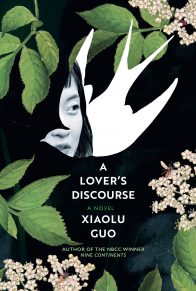
A Lover’s Discourse by Xiaolu Guo
Demon Copperhead by Barbara Kingsolver
Wide Sargasso Sea by Jean Rhys
James by Percival Everett
Great Circle by Maggie Shipstead
March by Geraldine Brooks
Hamnet by Maggie O’Farrell
Circe by Madeline Miller
The Voyage of the Beagle by Charles Darwin


 Black Cat