Praise for Heart the Lover:
Instant New York Times Bestseller
Longlisted for the National Book Critics Circle Award for Fiction
Longlisted for the Joyce Carol Oates Prize
Finalist for the PEN/Faulkner Award
Shortlisted for the Women’s Prize for Fiction
A BEST BOOK OF THE YEAR: TIME Magazine, New York Times, Washington Post, Boston Globe, Harper’s Baazar, NPR, Vogue, Oprah Daily, People Magazine, USA TODAY, Literary Hub, Electric Literature, Kirkus Review, BookPage, Apple, Spotify, Amazon, Barnes & Nobles, PEN America, Chicago Public Library
#1 Indie Next Pick
#1 Library Reads Pick
A Southern Independent Booksellers Alliance Read This Next Pick
A Laufey Book Club Pick
Zadie Smith’s Elle.com Shelf Life pick for “the book that made me weep uncontrollably”
“Even I, who married my college sweetheart more than 40 happy years ago, read Lily King’s new novel about what might have been in a state of blubbery longing . . . Heart The Lover is nostalgia distilled in black ink . . . King captures [her protagonist’s] guileless sense of awe with just a dusting of parody that never grows silly or bitter . . . And what’s particularly remarkable is how subtly King ages her narrator, preserving the kernel of that young woman’s openhearted urgency in the older woman’s complex voice . . . Only Lily King could tell a story so steeped in sorrow and so filled with hope.”—Ron Charles, Washington Post
“King is a master of sexual tension, of the slow build, of gratification tortuously delayed. In this respect, Heart the Lover is her best work yet.”—Lauren Christensen, New York Times Book Review
“Might be her best book yet . . . It stands as one of the most emotionally devastating and soulfully wise novels I have ever read . . . Like all of King’s fiction, Heart The Lover is literary without pretension, emotional without maudlin sentimentality . . . heartrending, swoonily romantic, rigorously clear-sighted.”—Priscilla Gilman, Boston Globe
“The latest masterpiece from the author of Writers and Lovers and Euphoria captures all the fevered obsession of 20-something romance—plus the deeper satisfaction of watching characters evolve beyond youthful hang-ups into fully realized adulthood.”—Oprah Daily
“Enveloping and sly . . . building heft in a manner as mysterious as affairs of the heart.”—Vogue
“Heart the Lover, like Writers & Lovers, feels at times as if it has been poured directly from the writer’s soul onto the page. Its opening words flag an elegy—to a lost love and to youth . . . What starts as a campus novel leaps over decades to offer a more expansive view of life that spans the emotional gamut from elation to grief. (Keep tissues handy.)”—Heller McAlpin, Wall Street Journal
“Witty, insightful . . . King is able to employ the best kind of humor: amusing comments that are funny not because of what is said but because we can hear exactly how the characters are saying them.”—Chris Hewitt, The Star Tribune
“Intensely moving . . . The structure of Heart the Lover is so ingenious, its emotional charge so compelling . . . [A] great triangular love story . . . about screwing up, wising up, finding yourself and realizing what you may have lost in the process.”—Maureen Corrigan, NPR
“An intimate novel about formative first love, friendship and the relationships that never leave us. This time-hopping story (of the perfect length, if you ask me!) sweeps you into the narrator’s point of view with such visceral immediacy that it’s easy to lose yourself in her memories. I canceled my plans to finish this gorgeous book, and I felt welcomely emo for a few days afterward.”—Beck Harlan, NPR, “20 Books to Read With Your Book Club”
“King wholly captures the highs and the heartbreak of a passionate college romance . . . One of many lovely aspects of King’s writing is her ability to convey yearning as an integral component of character . . . Has many individual sentences that glow like small gems, as with a character’s sudden awareness of a landscape . . . Achingly poignant.”—Carol Iaciofano Aucoin, WBUR
“Achingly, gloriously sincere. You could say to a fault, except it’s clearly intentional. These are young people who want to fall into big feelings but also wonder if they can handle them at the same time.”—Chicago Tribune
“[T]his affecting novel…questions whether a person can inhabit any moment other than the present.”—New Yorker
“Suffused with the heady impermanence of first love, King’s sixth novel is bittersweet, astutely observed, and thoroughly engaging.”—People
“To read Lily King is to love her.”—Harper’s Baazar, “The 10 Best Books of 2025”
“Heart the Lover is the kind of immersive, overwhelming novel that makes you want to live inside it for days. It’s both prequel and sequel to King’s 2020 novel Writers and Lovers, but it stands on its own perfectly well if you haven’t read its predecessor. (I haven’t, and now I’m longing to.) Be warned: Once you’ve opened the covers, you aren’t putting it down until you have to.”—Vox, “The 10 Best Books of 2025”
“Witty, insightful . . . sharp, funny company . . . Jordan’s first-person narration is so observant and distinctive that we feel like we know her”—Minneapolis Star Tribune
“Heart The Lover is alternately sweet and heartbreaking. King is so good at making a big impression with small details. There’s never a word out of place nor any in excess, and yet she still manages to convey so much in the vignettes we see of the characters’ lives. I think this book conveys so well how our lives can be shaped profoundly even by someone you only knew for a short period of time. But it’s not just about knowing them, it’s about them knowing you at that particular moment of your life, the way that version of you is preserved in their memory.”—Mary Kate Carr, A. V. Club
“A short but incredible novel about first loves and how those loves hook your heart and don’t let go. Who do we still love from our past? Who still loves us? An incredibly written but sparing work, Lily King’s newest is a masterpiece of humanity and beauty. It will knock your socks off.”—Kate Gibson, co-host of The Book Case
“Lily King’s latest is a weeper, full of card games and witty banter and sure to tug at your heartstrings.”—USA Today
“[Y]oung and intense and foolishly stubborn, this love triangle takes a redemptive turn that feels grounded, believable and quite beautiful. Jordan is a wonderful protagonist—funny, despairing, self-deprecating, lonely and determined to write novels. This is a satisfying, emotionally rich tearjerker, a book that just may make you sob out loud.”—Bookpage (starred review)
“King’s swoony story of love and literature, of paths taken and not taken, of the past selves we never truly leave behind, is quietly robust and nearly impossible to put down.”—Booklist (starred review)
“King is a genius at writing love stories . . . Her mostly sunny version of the campus novel is an enjoyable alternative to the current vogue for dark academia. Tragedies are on the way, though, as we know they must be, as nothing gold can stay and these darn fictional characters seem to make the same kinds of stupid mistakes that real people do. Tenderhearted readers will soak the pages of the last chapter with tears. That college love affair you never got over? Come wallow in this gorgeous version of it.”—Kirkus Reviews (starred review)
“[T]his book both delighted me intellectually and affected me on a profound emotional plane . . . It’s the best love story I’ve read all year, and the day I finished reading it, I did something I have never done before: I put my copy into an envelope and sent it to my best friend, so that I’d have someone to talk to about it.”—Emily Temple, Literary Hub, 15 Novels you Need to Read this Fall
“Beautifully written . . . I was hooked from the first page.”—Daily Mail (UK)
“A triangle charged with secrecy, longing, uncertainty . . . Exploring how first love shapes a lifetime, here is a novel of piercing clarity.”—The Independent (UK)
“Lily King has written another masterpiece. This book overflows with her brilliance and her heart. We are so lucky.”—Emma Straub, New York Times bestselling author of This Time Tomorrow
“Time moves like memory in Heart the Lover—urgent, intimate, elusive. What does it mean to carry a story you never get to finish? With breathtaking precision, Lily King writes about love that lingers and choices that haunt. I read it in a single, breathless sitting.”—Ruth Ozeki, author of The Book of Form and Emptiness
“Indescribably good. It is incredible that Lily has managed to tell such an epic love story in just 250 pages, and I emerged feeling ruined for all other books. I adored these characters and feel lucky to have known them. I’m in awe. A perfect literary love story.”—Florence Knapp, New York Times bestselling author of The Names
“I inhaled this novel in one breathless gulp, constantly asking myself, how is she doing it? How is she writing this tender, funny, deeply empathetic novel while also making it impossible for me to stop turning the page? Heart the Lover is a magic pill and Lily King is its virtuosic alchemist.”—Tahmima Anam, author of The Startup Wife
“Touching, thoughtful, a deeply affecting love story about time and regret.”—David Nicholls, author of One Day
“A tender and memorable novel about love, loss, and friendship that lifts and undoes you equally.”—Susie Boyt, author of Loved and Missed
“Heart the Lover returns Lily King to what she does better than anyone these days: fast-moving romances that only slow unexpectedly for a sock in the gut.”—Chicago Tribune
“The No.1 way to tell how much I am impacted by something? How hard it is for me to shut up about it. I have not shut up about this book.”—Jackson Mississippi Clarion Ledger
“Heart the Lover is about fully lived lives. It is a treasure.”—DailyKos.com
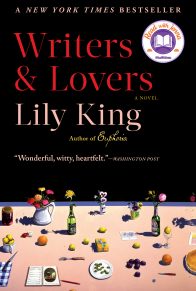
Praise for Writers & Lovers:
“With wit and what reads like deep insider wisdom, Ms. King captures the chronic low-level panic of taking a leap into the artsy unknown and finding yourself adrift, without land or rescue in sight.”—Maureen Corrigan, Wall Street Journal
“I loved this book not just from the first chapter or the first page but from the first paragraph . . . The voice is just so honest and riveting and insightful about creativity and life.” —Curtis Sittenfeld, London Evening Standard
“[D]elightful . . . [A]n unmistakable broadside against fiction’s love affair with macho strivers, even — or especially — when layers of lyricism and tenderness coat their machismo. The emotional force of Writers & Lovers is considerable.” —New York Times Book Review
“Wonderful, witty, heartfelt . . . Writers & Lovers is a funny novel about grief, and, worse, it’s dangerously romantic, bold enough and fearless enough to imagine the possibility of unbounded happiness.” —Washington Post
“This smooth, deliberate chronicle of creation keeps the men in their place and Casey firmly rooted at the center of her own story. Instead of casting her as a woman torn between archetypes of male creativity, Writers & Lovers portrays her as a woman in thrall to her own generative processes, a devotee to the art of (her own) attention.” —Los Angeles Times
“Among the elements that make Writers & Lovers so winning are the perfectly calibrated little details, convincing conversations, and droll wit . . . Writers & Lovers is a book about passion, desire, grief, determination, and finding one’s way. It’s also about craving love, family, and success . . . generously infused with heart and soul and wit and wisdom.” —NPR
“King has created a woman on the cusp of personal fulfillment and strong enough to stand on her own, someone akin to Sally Rooney’s Frances in Conversations with Friends . . . But King also situates Casey inside a variation of the which-lover-will-she-choose framework of, say, Nancy Meyers’s film Something’s Gotta Give . . . The novel is a meditation on trying itself: to stay alive, to love, to care. That point feels so fresh, so powerfully diametrically opposed to the readily available cynicism we’ve been feasting on . . . King wants us to keep trying, through whatever means necessary, to beat the odds.” —Boston Globe
“This novel will become a defining classic for struggling young writers.”—Vulture
“King captures the agita of an early-life crisis and the eccentricities of a writer’s life, spiking the narrative with wit, sumptuous imagery and hilarious skewerings of literary elitism.” —People
“Writers & Lovers made me happy. Even as the narrator grieves the loss of her mother and struggles to make art and keep a roof over her head, the novel is suffused with hopefulness and kindness. Lily King writes with a great generosity of spirit.” —Ann Patchett, author of Tom Lake
“Lily King is one of our great literary treasures and Writers & Lovers is suffused with her brilliance. It is captivating, potent, incisive, and wise, a moving story of grief, and recovering from grief, and of a young woman finding her courage for life.” —Madeline Miller, author of Circe
“Gorgeous!” —Elizabeth Strout, author of Olive Kitteridge
“If you loved The Friend but wish it had had more sex and waitressing, get ready for Lily King’s Writers & Lovers. Delicious.” —Emma Straub
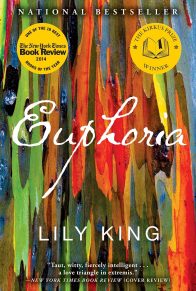
Praise for Euphoria:
“Taut, witty, fiercely intelligent . . . King is brilliant.” —New York Times Book Review
“Intense, seductive, sexual, and intellectual . . . There are so many exhilarating elements to savor in Euphoria . . . Brava to Lily King.” —San Francisco Chronicle
“Atmospheric and sensual . . . An intellectually stimulating tour de force.” —NPR
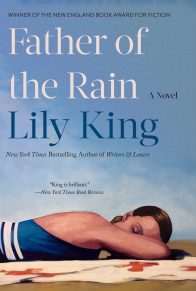
Praise for Father of the Rain:
“Surprising and wise . . . An absorbing, insightful story written in cool, polished prose right to the last conflicted line.” —Washington Post
“King is a beautiful writer, with equally strong gifts for dialogue and internal monologue.” —New York Times Book Review
“Haunting, incisive . . . King is brilliant.” —Elle
“An excellent novel, sensitive and perceptive.” —Chicago Tribune
Reading Group Guide for Heart the Lover
by Gwyneth Henke
1. For most of the novel, the narrator goes by a nickname given to her by Sam and Yash—“Jordan,” after the character from The Great Gatsby. Later, Yash and Jordan call each other “Hink,” and Yash affectionately calls Sam’s children “tadpoles” and Marni’s daughters “the pigeons.” How do nicknames create—or deflect—intimacy throughout the book? Is Jordan a good name for the narrator?
2. How does gender shape Jordan’s education compared to Yash’s and Sam’s? Consider especially their relationships to their professors.
3. Jordan essentially moves into the Breach House with Sam and Yash for her senior year. She is enamored with not only the boys but their lifestyle—one dominated by reading, play, and intellectual debate. What makes the Breach House so special to Jordan? What does it teach her about herself? Have you ever created a sense of home like that?
4. As Jordan is getting to know Sam, Yash, and Ivan, she reveals that Cyra, a girl she lived with briefly the previous summer, was raped and killed shortly before the semester began. Yash soon reveals that he was also at Cyra’s funeral and saw Jordan there. What did you make of this connection and of Cyra’s death? How does it connect to the broader theme of gender in the book—including Jordan’s father’s treatment of his second wife, Yash’s father’s view of his mother, and EJ’s anger towards Marni? How does it impact Jordan and her relationships with Sam and Yash?
5. Jordan, Sam, and Yash all view their lives and relationships through the lens of books and stories: Independent People, The Aeneid, Augustine’s Confessions, Ulysses, The Great Gatsby. Pick one of these books and consider how it relates to the novel. Or, discuss your own relationship to books: have you ever had a book shape a romance or friendship the way they do for Jordan, Yash, and Sam?
6. Discuss Jordan’s relationship with Sam. What connects them? Where does their conflict come from? How does Sam treat Jordan, and make Jordan feel, compared to Yash?
7. As much as this book is about romantic love, it’s also a testament to friendship. How did you understand Sam and Yash’s friendship throughout the book? What do they give each other? How does that change?
8. Before Yash’s visit to Paris, Jordan gets conflicting advice about her relationship. Léa tells her that she’ll never feel as strongly about anyone again and that she should marry Yash, whereas Nobiko tells her to let him go (109-110). Did you agree with one woman’s advice more than the other? What does the book have to say about how we should understand first loves?
9. After Yash’s visit to Paris, Jordan remembers her elementary school boyfriend breaking up with her when she revealed how much she liked him. She writes, “I haven’t told Yash that story. I didn’t want him to see it as a cautionary tale” (127). Pick a moment from the first part of the book and consider how it plays out in the second and third. Where can you spot “cautionary tales,” or foreshadowing, in the novel?
10. At the end of part one, we make a shocking discovery about Jordan. Reread the sentence that reveals this to us (128). What was it like to learn this and why do you think King chose to reveal this news in this way?
11. During the Immortality seminar, Yash and his professor argue about the definition of “hamartia.” Dr. Gastrell defines hamartia as a “tragic flaw,” while Yash translates it to a “random error of judgment,” saying, “the power and poignancy come from the very randomness itself, the sense that any one of us, not just a good king with a built-in flaw, is capable of making a mistake” (93). Decades later, Yash tries to describe his actions after Paris as a momentary lapse in judgement, while Jordan connects them more deeply to Yash’s identity. How do you interpret Yash’s decision—as a random error of judgment or a tragic flaw? What does either interpretation mean for the book at large?
12. After the opening page, which is addressed to “you,” the novel’s voice shifts between third person (“Yash”) and second person (“you”). What was the effect of both voices on your reading experience? Why do you think King structured the novel in this way?
13. Compare Jordan’s marriage to her relationship with Yash. What does each reveal about passion, connection, and commitment? Did either relationship remind you of periods in your own life?
14. Yash has a deep connection with children—Marni’s daughters, Sam’s sons, Léa’s children, and even Jordan’s boys, brief as their meeting was, to whom he becomes “Yash in the tree.” What role do children play throughout the novel, and what does Yash’s connection with children reveal about him as a character?
15. During her narrative in part two, which is addressed to Yash, Jordan repeatedly writes, “Why are you here?” In part three, we find out precisely why Yash made that visit (202). How did this change your reading of the second part of the book? Does it answer Jordan’s question?
16. Jordan’s editor describes love in her novels as “a form of hope” (188). Apply this idea to Heart the Lover. Does love act as a kind of hope, or, as her editor argues, is it “crushing . . . something you let yourself feel at your own peril, despite your better sense” (188)? What does Jordan believe about love? What do you?
17. When Yash says that he’s afraid of the concept of eternity, Jordan argues, “Only if time exists as we experience it. Which we know it does not. Without time, eternity loses its bite” (238). The structure of the novel plays with time quite a bit. Part one covers years while part two lasts a single day and night; in part three, time slips by at a dreamlike pace—flight after flight missed, hours lost, meals skipped. How did you experience the passage of time in the book? In particular, discuss what King might have been illustrating about trauma, grief, and memory by using time in this way.
18. Goodbyes come up a lot throughout the novel. In part three, Sam tells Jordan, “Say goodbye. Goodbyes are important” (225). When do goodbyes happen in the book, and when do they not? Can a missed goodbye ever be made up?
19. In part three, Yash says of marriage, “I don’t think I would have been good at it. Maybe a quarter of the time. The rest of the time I’d want to be alone” (236). Sam makes a similar observation about Yash, saying, “He chose to spend his life alone. It’s not something that
just happened to him” (225). EJ, too, tells Jordan, “He pushes everyone away at one time or another” (192). Discuss Yash’s need for solitude and tendency to withdraw. Where do you see it appearing in the first part of the novel, especially in his and Jordan’s relationship? Where do you think it comes from?
20. Both Yash and Jordan’s son, Jack, navigate unexpected illness in part three. What did you make of this parallel? How does Jordan seem to understand it, and how does her experience with Jack inform her relationship with Yash?
21. For those who’d already read Writers & Lovers, when did you realize who “Jordan” really was? How did that impact your reading of the book? If you haven’t read Writers & Lovers, what did you make of the final scene? What might King be saying about belonging, love, and being known, here and throughout the novel?
Suggestions for Further Reading
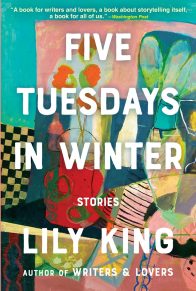
Writers & Lovers and Five Tuesdays in Winter by Lily King
The Idiot and Either/Or by Elif Batuman
Normal People by Sally Rooney
The Lowland and Unaccustomed Earth by Jhumpa Lahiri
Breasts and Eggs by Mieko Kawakami
Norwegian Wood by Haruki Murakami
Good Women by Halle Hill
Housemates by Emma Copley Eisenburg
A Lover’s Discourse by Xiaolu Guo
The Friend by Sigrid Nunez
Clever Girl and Late in the Day by Tessa Hadley
Loved and Missed by Susie Boyt
My Name is Lucy Barton by Elizabeth Strout
Old Filth by Jane Gardam
The Transit of Venus and The Evening of the Holiday by Shirley Hazzard
Independent People by Halldór Laxness
An American Marriage by Tayari Jones
My Friends by Hisham Matar
The Great Gatsby by F. Scott Fitzgerald
Hunger by Knut Hamsun
To the Lighthouse by Virginia Woolf
Man Gone Down by Michael Thomas


 Grove Press