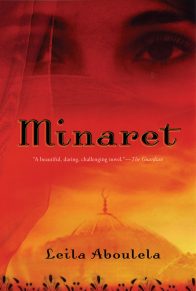
1. At the end of Chapter 1, the narrator, Salma, describes herself as “a rootless windblown desert weed” (p. 32). What does she mean by this? What are Salma’s impressions of her new home in England? What do the vibrant memories of her native soil and the way of life of her Bedouin tribe explain about her?
2. Salma’s narrative alternates between her present existence in England and her past as a shepherdess in Hima. Salma relates her past and why she had to leave her country. She seems to be trying to fit in, but is full of self-hatred. How does she express this? Does this feeling spring from her transgressions against the traditions of her people or her feelings of isolation and alienation in Exeter? Explain.
3. “He would tug at my hair and say, ‘You are my courtesan, my slave.’ ‘Yes, master,’ I would say” (p. 45). How did you feel about Salma’s sexual initiation with Hamdan? What did her mother’s reaction reveal about their relationship in particular and their tribal family in general?
4. Salma has important relationships with a number of women, including her English landlady, Liz, her Pakistani friend, Parvin, and her Welsh friend, Gwen. Each of these women sees a different Salma. Describe their different views of Salma. Do Salma and Sally have different personalities? In what ways do Parvin, Liz, and Gwen affect Salma/Sally?
5. Both Liz and Parvin are straddling two cultures just as Salma is. Liz in her drunkenness often cannot distinguish between her present life in England and her life as a privileged girl in the bygone India of the Raj. Parvin has left her hometown to escape an arranged marriage and is trying to make her way away from her family. How do the circumstances of these two women help to shed light on Salma’s story?
6. “Religion was as weak as the tea in this country. What was left of it was, ‘Is this your maiden or Christian name?’ which the immigration officer had asked me and I did not know how to answer. ‘Muslim no Christian.’” (p. 40). While the story is a tragic one there are numerous instances of humor produced by cross-cultural misunderstandings like this one. What are some other instances of humor in the book?
7. “If I keep stitching and fasting; if I keep silent, I would slip slowly out of my body like a snake shedding her old skin. I might stop being Salma and become someone else, who never had a bite of the forbidden apple. Time might pass quickly so I would slide gently from prison to grave. No pain, resistance or even boredom” (p. 52). Give some examples throughout the story where Salma attempts to be someone she isn’t. Does she take comfort from these attempts?
8. Salma has a black shawl that once belonged to her mother. How does she use this memento of her past life? Talk about other mementoes.
9. Salma is haunted by her past and especially by the baby girl that was wrenched from her at birth. “Suddenly the fine hairs on the back of my neck stood up. I knew that breeze. She was out there crying, looking for a foothold. I knew that wind. A sudden chill ran through me so I bent forward as if winded and hugged my erect nipples” (p. 215). What emotions do you think are directing Salma here? Would you say that she is in a permanent post partum depression?
10. Why do you think Salma marries John? Why after all the years that have passed, a new baby, and the beginning of better prospects for Salma does she decide to go home? What choices would you have liked to see her make after all her years in exile? Explain how you think she could have made these choices.
11. Did you feel the ending was inevitable?
12. What other cultures condone “honor” killings?
Suggestions for further reading:
Brick Lane by Monica Ali; The Saffron Kitchen by Yasmin Crowther; Small Island by Andrea Levy; The God of Small Things by Arundhati Roy; The Namesake by Jhumpa Lahiri; The Kite Runner by Khaled Hosseini; Reading Lolita in Tehran by Azar Nafisi; The Almond by Nedima; The Inheritance of Loss by Kiran Desai; The Girl in the Tangerine Scarf by Mohja Kahf; The Attack by Yasmina Khadra
Film:
Water directed by Deepa Mehta; Heat and Dust directed by James Ivory; Mississippi Masala directed by Mira Nair; My Beautiful Laundrette and Dirty Pretty Things directed by Stephen Frears; East is East directed by Damien O’Donnell; Bhaji on the Beach directed by Gurinder Chadha


 Black Cat