What relationship do the epitaphs have to each other? How do the epitaphs reflect the title of the novel? What is Julio trying to find? From what nightmare is he trying to awake?
In the first chapter, the apparent narrator, Julio, is struggling with his writer’s block while his wife, Gloria, works undaunted on the translation of George Eliot’s Middlemarch. What are the factors that contribute to Julio’s writer’s block? Why does Gloria’s diligence threaten Julio? What relevance do the references to Middlemarch have to Julio and Gloria’s relationship? How does the ironic outcome of the novel refer back to Middlemarch?Throughout the novel, we are introduced to several Latin American exiles. How does Julio classify the different types of exiles? How do the exiles classify themselves? Is there a hierarchy? Discuss the exiled characters and their distinct experiences and perspectives.Julio refers to his own marginal inclusion in the Latin American literary “boom.” When did the boom take place? Which real “boom” authors and novels does Julio mention? Whom does Marcelo Chiriboga represent? Whom does N”ria Moncl’s represent? What biographical affinities exist between Julio M”ndez and Jos’ Donoso?In Chapter 3, Julio, Gloria, Katy, and Bijou bump into N”ria Moncl’s and Marcelo Chiriboga in an antique shop in Madrid. How do each of the characters respond to Marcelo Chiriboga’s fame? How does N”ria present Julio to Marcelo? How does Julio react to this encounter?The clash between the identity of Latin American exiles and their adolescent children who were born or raised in Europe reappears in The Garden Next Door? How can we characterize Julio’s relationship to Bijou? How can we characterize Julio and Gloria’s relationship to Patrick? How can we characterize Katy’s relationship to Bijou? Julio, Gloria, and Katy are Chilean, Argentine, and Uruguayan exiles who left oppressive regimes to live in Franco’s Spain. In a democratic Spain, what relevance do their memories of oppression in their homeland have? How does this relevance affect Julio’s narration of his experience in a Chilean prison?What messages are written in the graffiti on the walls outside Pancho Salvatierra’s apartment? Why does Julio worry when he sees the graffiti on the walls in the aristocratic neighborhood in Madrid? In Chapter 6, Gloria has lunch with N”ria Moncl’s. How does N”ria differ from Julio’s description of her? How does N”ria fulfill our expectations of her? What role does she play in determining the ending of the novel? Why is this ending ironic? The Garden Next Door presents many elements of metafictional narrative. Identify and discuss the metafictional elements in Julio and Gloria’s work as translators; in Julio’s creative process; in Julio’s repeated mention of the garden next door; in Gloria’s proofreading and criticism of Julio’s text; in N”ria’s praise of the novel; and in Gloria’s usurping of Julio’s narrative voice.RECOMMENDED READING:
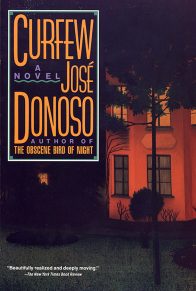
Hopscotch by Julio Cort”zar; The Mirror in the Text by Lucien D’llenbach; Curfew by Jos’ Donoso; The Latin American “Boom”: A Personal History by Jos’ Donoso; Taratuta/ Still Life with Pipe by Jos’ Donoso; Middlemarch by George Eliot; The French Lieutennant’s Woman by John Fowles; La nueva novela hispanoamericana by Carlos Fuentes; El mar que nos trajo by Griselda Gambaro; Narcissistic Narrative: The Metafictional Paradox by Linda Hutcheon; The Hour of the Star by Clarice Lispector and Giovanni Pontiero


 Grove Press