Maggie is gone. And her mother, Ann, is reeling.
In the aftermath of 9/11, eleven-year-old Maggie’s first instinct was rage. But when her parents took her to an open house at a mosque, she glimpsed a faith of beauty and peace—and over time came to embrace Islam as her own.
A decade later, Maggie has left Maine for the life in New York she always dreamed of. Yet her joy is shadowed by images from Syria: civilians starving, children buried under rubble. She feels powerless to help. Then she meets Ahmet, the handsome and headstrong son of a neighborhood baker. Ahmet is enraged by all the same things she is—so much that he leaves his life behind to join a new rebel group emerging in Syria, electrified by its sweeping vision to fight Assad and create a Muslim utopia. The group is ISIS.
Driven by love, Maggie follows him into territory from which she can’t return. Trapped without her passport and cut off from home, she slowly gleans the brutal nature of the group she has joined, one that does not share her vision of Islam.
Back in Maine, Ann is left with silence and half-truths, with the hope that one day her daughter will realize her mistake and come home. As ISIS explodes into global infamy, Ann becomes consumed by questions of what she did not see in her daughter and how belief—whether religious, political, or maternal—can turn to conviction, and conviction to ruin.
Told in counterpoint between mother and daughter, America and Syria, Conviction is both intimate and global in scope: a portrait of love during war, and a nuanced dive into the horrors of the modern world and the conditions that beget violence.
Praise for Conviction:
“A taut narrative of fear and loss . . . Demonstrating that the personal is the political, Winthrop’s narrative conveys domestic as well as global suffering with equal gravitas. Eminently discussable and brutally revelatory.”—Kirkus Reviews (starred review)
“A searing novel about family and the cost of mislaid idealism. The beautifully structured narrative reveals the lives and relationship of a mother in Maine and her daughter in Syria with a breadth and urgency that is both heartbreaking and hopeful.”—Alice Austen, author of 33 Place Brugmann
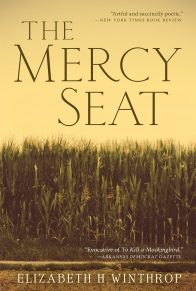
Praise for The Mercy Seat:
“It takes a brave writer to compose a novel about the execution of an African-American man in the Deep South when the topic has previously been brought to life by authors like Harper Lee and Ernest Gaines. There are multiple possibilities for failure: preachiness, melodrama and bias, to name a few. But Elizabeth H. Winthrop avoids these hazards by writing well, demonstrating once again that while the subject matter is the body of the narrative, the prose itself is the soul and the thing that makes a topic new.”—Tim Gautreaux, The New York Times
“Beautifully crafted.”—BBC.com
“This potent novel about prejudice and the constraints of challenging the status quo will move and captivate readers.”—Publishers Weekly (starred review)
“A remarkable work with a stunning unexpected conclusion, not to be missed.”—Library Journal (starred review)
Reading Group Guide
Reading Group Guide by Keturah Jenkins
1. What does the title Conviction mean in the story? How does it work on different levels?
2. The first section of the novel immerses readers in Ann’s grief before we fully understand what’s happened to Maggie. Why do you think the author brings us into the lives of these mothers, Ann and Nour, before focusing on Maggie’s journey? How does starting with motherhood frame the reader’s attitude toward what comes next?
3. What does the novel illustrate about the difference between religion and extremism? When does Maggie’s journey cross that line?
4. Think about how Maggie’s hopeful, idealistic view runs up against what she faces in ISIS. How does that challenge her ideas about faith and injustice?
5. Describe how the relationship between Ann and Maggie changes throughout the book, even when they’re apart or not speaking.
6. On pg. 83, Maggie remembers thinking, “It must have been fate,” when she first met Ahmet. What is Ahmet’s role in the story? How does his influence shape Maggie’s choices, beliefs, and sense of identity? Discuss how the novel portrays Maggie’s relationship and marriage to Ahmet.
7. Ann gives Maggie an orchid, which she gifts to Sirvan before leaving for Syria (pg. 247). Iman Ali uses a photograph of an orchid to illustrate the beauty of nature and the omnipresence of God, explaining “God is not a person. God did not walk the earth in human form. God is all around us” (pg. 75). Discuss the symbolism of orchids throughout the novel.
8. Compare and contrast Ann and Maggie’s reactions to Josh’s illness and death. How do you think the novel could have been different if Josh had survived?
9. How does the post‑9/11 treatment of the Muslim community shape Ahmet’s ability to practice and express his faith openly?
10. Sirvan identifies as an Iraqi Kurd, telling Maggie, “I happened to be born in Kirkuk, but I am first and foremost a Kurd” (pg. 101), as he explains America’s decades of betrayal against his people. How does Sirvan challenge Maggie’s thinking about responsibility, ideology, and political loyalty? How do his beliefs, especially his idea that “to be inside the US . . . is different than being on the outside” (pg. 103), shape his relationship with Ahmet? Discuss Sirvan and Ahmet’s differing approaches to Islam and Muslim identity.
11. While in New York, Ahmet and Maggie understand Syria largely through what they see online, including news of “the Houla massacre” and “mounting atrocities” by Assad’s regime (pg. 152). Once in Raqqa, Maggie is cut off from the news and later reacts with disbelief when her mother tells her what is really happening within ISIS: “More than six thousand people. Hanged. Burned. Crucified. Executed” (pg. 163). Discuss the role the media plays in the novel. How does access to, or isolation from, news shape Ahmet’s and Maggie’s understanding of the events unfolding in Syria?
12. On pg. 292, the line “This is what they hope. This is what they fear.” sums up Ann and Sirvan’s uncertainty about Asma’s future. What do they most hope and worry about? How does Asma represent both the damage violence causes and the chance to heal?
13. Nour says, “The babies are blameless. The babies I will not forsake” (pg. 288). What does this statement reveal about her moral code in a world shaped by violence? Discuss how Nour’s choices show both the limits of individual control and the power of personal conviction. How does Adnan honor her values, and what does his role suggest about preserving humanity in difficult circumstances? Finally, how does the epilogue title, “The Blameless,” invite readers to reconsider blame, responsibility, and forgiveness?
Suggestions for Further Reading:
The Wrong End of the Telescope by Rabih Alameddine
The Map of Salt and Stars by Zeyn Joukhadar
The Kite Runner by Khaled Hosseini
Guest House for Young Widows: Among the Women of ISIS by Azadeh Moaveni
The Way of the Strangers: Encounters with the Islamic State by Graeme Wood
Home Fire by Kamila Shamsie
The Kindness of Enemies by Leila Aboulela
The Association of Small Bombs by Karan Mahajan


 Grove Press
 NEW!
NEW!