“This excavation of family, violence and shame is woven through with beautiful imagistic detail, and – unexpectedly – shades of hope. We loved the rich, textural detail of the story.”—The Booker Prize 2026 judges
“Powerful and surprising . . . [A] moving, suspenseful, completely-worth-your-time new novel . . . John of John is a stick of dynamite waiting to go off in your hand, the steadily intensifying story of a fractured trio . . . Stuart is not just a very good writer but an immensely skilled storyteller . . . one of the many pleasures of John of John—a title that eventually blossoms to reveal about five different meanings, all interesting—is that Stuart doesn’t let on until the very end whether he is writing toward hope or toward tragedy. Until he reveals the answer, he wants you to stay in the room with these difficult people, to try to puzzle them out, to watch them wage impossible struggles, and to wish them well.”—Mark Harris, The New York Times Book Review
“[A] beautiful novel about duty, faith and the isolation of keeping secrets from the people closest to you.”—NPR
“A ray of hope . . . John of John suggests that all we can do in the meantime is love those around us beyond mere speech, leaving space when words cannot be found.”—The Los Angeles Review of Books
“A muscular narrative with scrupulous technique. It’s his finest work yet . . . Stuart’s prose is gorgeous and his plotting strategic; nothing is lost . . . John of John is one of 2026’s literary triumphs; Stuart ups his game with fluency and confidence, all the more gratifying given his working-class background—no nepo baby, he. As he observes of John Macleod’s liturgies: ‘When he read the Gaelic scripture, the damning words always transformed into something lyrical, beautiful, incantatory.’ The same can be said of this generational talent.”—Hamilton Cain, The Boston Globe
“Douglas Stuart brilliantly weaved a layered, compelling and yet so intimate a story of identity, what it means to belong, and the courage to claim your own truth.”—Oprah Winfrey
“The novel feels like a textured and affecting response to an early question posed to Cal: ‘Who do you belong to?’”—New York Magazine, “8 New Books to Read This May”
“Both a dissection of a troubled family and a eulogy for dying folkways in the Hebrides islands.”—Time
“An autodidact novelist’s new book is his best work to date . . . A sprawling, emotionally rich saga that extends Stuart’s investigation into masculinity while sketching a world in which his gay characters come fully, finally alive. It’s his best yet.”—Vulture
“A work overspilling with vitality . . . Like the warp and weft of a beautiful garment, John of John achieves a deft balance between detail and drama, sadness and comedy . . . You finish the novel feeling emotionally enriched and slightly bereft at leaving its characters behind. Few contemporary novelists produce prose so vivid, generous and full-bodied. I suspect John of John will resonate profoundly with readers—and it is difficult to imagine this year’s Booker shortlist without it.”—The Sunday Times
“A reprise of the parable of the prodigal son and an ardent exploration of the half-lives of queer men condemned to love, pine and suffer in silence. Intimate yet epic in scale, it contains equal parts pastoral drama, tale of familial fracture, love story and inquiry into various forms of loneliness . . . Diehard romantics will find much to love; I see Cal, John and Innes—knottily entangled and imperfectly endearing—being cherished with readerly devotion.”—The Guardian
“An emotionally potent story about a young man grappling with his sexual identity and the push and pull of family.”—Washington Post, “19 Books We’re Looking Forward to in 2026”
“John-Calum McLeod, or Cal, returns to Scotland’s Isle of Harris after attending art school in Glasgow and finds it difficult to coexist with his father, also named John, who disdains everything about him. John McLeod Sr. expects Cal to attend the strict local church and work at the family’s weaving shed. While Cal resists this parental rigidity, the two do share something fundamental that threatens their community’s long-held foundations.”—LA Times, “10 Books to Read in May”
“When struggling artist John-Calum Macleod returns to his parents’ home on the Isle of Harris, he finds himself at odds with his preacher father. But as their lives crash together once more, he discovers that his father may also be keeping secrets. From the author of Shuggie Bain comes a tender tale of isolation and self-discovery that tackles the complexities of faith and identity with refreshing vulnerability. Douglas Stuart may just be our new king of drama.”—Chicago Review of Books, “12 Must-Read Books of May 2026”
“John of John grapples with all the usual themes of a Douglas Stuart novel—intergenerational trauma, substance abuse, religion, masculinity—but, in contrast to the bleakness of Young Mungo and Shuggie Bain, is shot through with tenderness, hope, and love.”—Dazed, “9 of the Best New Books to Read Spring”
“Strands of affection, hope, disappointment and loss between friends, lovers and relatives on Harris are knitted together . . . Told in beautiful, thoughtful prose that transports readers to lives and locales they will never know.”—Financial Times
“John of John takes us, literally and metaphorically, to very different places. In fact, in my estimation, it leaves Shuggie Bain in its shadow—a feat many would have thought impossible . . . John of John is Douglas Stuart’s most consummate work of literature to date . . . Stuart is masterful in evoking the landscape, culture and traditions of the isle of Harris.”—Nicola Sturgeon, The Observer
“From its early pages, Douglas Stuart’s John of John compels readers to contemplate how truths are often more painful than lies. The Scottish landscape may be backdropped with dour grey skylines, but the novel’s scenes shine brilliantly. For generations, the Macleods wove tweed and wool on the family loom, transforming plain fabrics into vibrant creations of dazzling color. Stuart does something similar, swirling a sentimental palette of stunning prose . . . The last quarter of the novel is impossible not to read in a single sitting and feels like it might’ve been penned by Thomas Hardy. The gripping finale is loaded with unexpectedly poignant moments that underscore the central tenet of the book: The truth is transformative, and the scars left by honesty are mere scrapes compared to the wounds from living a lie.”—Washington Independent Review of Books
“Like the characters and relationships in Shuggie Bain . . . those in this book are messy and complicated (a.k.a believable) but have, at their center, real love. And, not surprisingly, there are some lovely weaving metaphors throughout, not the least of which is how a mix of contrasting colors and imperfections yield the most compelling cloth.”—Conde Nast Traveler
“I really, really loved this one.”—MJ Franklin, The New York Times Book Club podcast
“Stuart showcases his impressive gift for characterization in this perceptive and propulsive story of a tight-knit community of Gaelic-speaking sheep farmers and weavers on the remote Scottish isle of Harris.”—The Millions
“It’s evocative, devastating and full of heart, with Stuart’s signature way of making you want to read a single sentence again and again.”—Elle, “Most Anticipated Books of 2026”
“Themes of desire and duty, inheritance and duty are woven as expertly as the tartan John produces, and Stuart’s gift for descriptions often feels miraculous.”—The Daily Mail
“Stunning . . . Another devastating story that got under my skin in the very best way.”—Good Housekeeping
“Epic . . . [Stuart] beautifully evokes the urgency and despair of a quotidian life.”—Time, “Most Anticipated Books of 2026”
“Stuart returns to the emotional fault lines he handles so well—family, masculinity, desire, and the pull of home—by following a young man who goes back to his island birthplace and into the unresolved tensions between himself and his father.”—Oprah Daily, “Most Anticipated Books of 2026”
“John-Calum Macleod, a recent art school graduate, returns to his family home in Scotland’s Hebrides Islands to care for his ailing grandmother—and learns the bigger task will be facing family secrets, past relationships and a father at odds with his son’s queer, liberal transformation.”—The New York Times, “32 Novels We’re Excited About This Spring”
“In John of John, Stuart is at the height of his formidable storytelling powers . . . What Stuart pulls off in the full expression of this very particular and specific father-son love story—leaning into the ugly resentments and nonetheless tender, generous ties of two tortured men—is a heartfelt feat of the highest literary order.”—Amy Lyons, Chapter 16
“Douglas Stuart has done it again. I thought I was prepared for the quiet, beautiful devastation of Booker Prize-winning author Douglas Stuart’s third novel, but I wasn’t quite ready for all the threads he managed to weave into this latest tale. While touching on many of the same themes as Shuggie Bain and Young Mungo, John of John trades the industrial grit of Glasgow for the harsh beauty of the Scottish Western Isles. The pastoral setting only enhances a storyline that’s just a tad bit slower, quieter, and imbued with the harsh and unforgiving elements of the islands themselves. Stuart has never needed help when it comes to crafting characters who feel real, but his gift is further elevated by actor Lorne MacFadyen’s performance, which perfectly captures the desperation and restlessness of the characters, their community, and the island they call home.”—Michael Collina, Audible Editors Pick
“Douglas Stuart didn’t set out to write the great gay Scottish novel, but he’s now written three of them. The Booker Prize winner follows up his modern classics Shuggie Bain and Young Mungo with a third, quietly devastating act, John of John.”—Interview
“The deeply personal new novel is already becoming one of the literary sensations of 2026 . . . John of John is already cementing itself as one of the defining novels of 2026 and further strengthening Douglas Stuart’s reputation as one of contemporary literature’s most celebrated voices.”—Parade
“Douglas Stuart’s best novel yet . . . With the publication of his third novel, John of John, we’re running out of superlatives . . . With John of John, Stuart makes the case that there are many species of love that dare not speak its name. After all, such muted affections are often the strained ligaments that hold a family together. As a friend tells Cal, ‘Everyone says it’s harder to leave. But it’s much harder to stay.’ Everyone says it’s harder to write a great tragedy, too, but it’s actually much harder to write a great story of happiness, of people learning at last how to love one another honestly, which, somehow, is what Stuart has done.”—Ron Charles
“A vivid family drama . . . As he explores the emotional battles of his characters, Stuart succeeds in shaping a story that devotes careful attention to the tangible quality of existence in this remote, barren but ruggedly beautiful place . . . Alongside its well-fashioned plot, the immediacy and freshness of its carefully carved sentences—which brim with acute observations and occasional sharp humor—make John of John a joy to read.”—Bookpage
“In the contemplative, reverberating novel John of John, the outwardly simple family dynamics of a religious Scottish family are questioned and reevaluated.”—Foreword (starred review)
“An immersive experience . . . Seamlessly, relationships are revealed, secrets divulged. As always, Stuart’s prose is a joy to read and get lost in. He conveys both the beauty and the isolation of the Hebridean setting while illuminating the lies we tell ourselves in order to cope.”—Booklist (starred review)
“The central question of the book, facing all the main characters, is whether it’s possible to inhabit the place one calls home as one’s genuine self. Stay or go? Life or death? With his gift for creating vibrantly specific characters and settings, Stuart again taps profound human truth.”—Kirkus Reviews (starred review)
“Booker Prize winner Stuart is in peak form, telling this story with an evocative sense of place, precise and complicated characterizations, and laugh-out-loud humor. Even when characters act their worst, their vulnerabilities and humanity shine through, making the tragedy of their decisions more poignant. A triumph.”—Library Journal (starred review)
“Booker Prize winner Stuart showcases his impressive gift for characterization in this perceptive and propulsive story of a tight-knit community of Gaelic-speaking sheep farmers and weavers on the remote Scottish Isle of Harris . . . Stuart’s deeply humane character work extends beyond father and son to their neighbors, including a sensitive middle-aged bachelor who belongs to John’s book club and cries while discussing Wuthering Heights. Stuart continues his winning streak with this brilliant novel.”—Publishers Weekly (starred review)
“A modern masterpiece . . . Stuart builds an absorbing, deliciously melodramatic story around the contrast between modernity and the old ways . . . Stuart’s every observation is profound; the simplest phrase is memorable for its beauty. Intriguing in its particularities but timeless in wisdom, John of John offers hope that relinquishing shame creates freedom to be true to oneself. It’s irresistible and an instant classic.”—Shelf Awareness (starred review)
“In John of John, Stuart shifts the landscape but not the intensity. Set in Scotland’s remote Hebridean islands, the novel follows a young man returning home, confronting a family bound by silence, expectation, and deeply rooted tradition.”—WAMC Northeast Public Radio
“John of John intricately weaves exploration of sexuality, masculinity, and generational trauma with the harsh realities of life in rural Scotland . . . Stuart has established himself as a master of human emotion. I’ll be thinking of these characters for a long time.”—Jillian Selzer, Vogue
“[A] masterful, heartbreaking character study”—Esquire
“His characters are crafted with meticulous care; they will break your heart with their stoicism, tenderness, and folly.”—Center for Fiction
“Gorgeously rendered . . . Stuart hits every note in this story about all the things that matter.”—Book Riot
“[Stuart] writes with piercing tenderness about family, faith, sexuality and the places that make us.”—i Paper
“The next novel from the Booker Prize winner is a tender and devastating story of a father and son, focusing on a young man’s return home and how the bonds of family life are torn by the weight of expectation.”—Denise O’Donoghue, The Irish Examiner
“Stuart weaves a story of duty, suppressed emotion, and the ‘terrible secrecy’ of a father-son relationship set against the wild, isolated backdrop of the Outer Hebrides.”—Aimée Walsh, The Mirror
“[A] striking queer coming-of-age story.”—Marion Wink, People Magazine
“From Douglas Stuart, Booker prize-winning author of Shuggie Bain and Young Mungo comes a stunning new novel, John of John . . . a tender and devastating story of love and religion, of a father and son, art and landscape, and the corrosive effects of living a secret life. It confirms Douglas Stuart as one of Britain’s greatest contemporary novelists.”—Sarah Gill, Image
“Stuart’s descriptions of the island and its community as a whole are also nothing short of masterful, relayed in exquisite prose and vividly conveying the area’s unique culture . . . Stuart writes with heartbreaking beauty of a disappearing way of life.”—Kim Kovacs, BookBrowse
“In this beautifully observed novel, Stuart portrays lives as materially poor as those in his previous work but of a far greater spiritual and emotional richness. The language is as spare as the Hebridean landscape, enriched with metaphorical flourishes.”—Michael Arditti, The Spectator
“Stuart has indeed imagined a life where you really do have to quiet yourself . . . There is a huge cast of characters, all of them well realised, right down to the smallest roles. The level of writerly empathy is off the scale.”—David Robinson, The Scotsman
“Smart and sympathetic to everyone in its beautifully realised world, John of John is literary fiction at its best.”—The Telegraph
“The Scottish writer once again weaves a tale about the unspoken threads that threaten to unravel between generations and the costs of keeping one’s true identity, queer or otherwise, hidden.”—W Magazine
“John of John is a bleak novel, but not entirely hopeless. Tenderness is an event – fleeting, fragile – all the more arresting because of its scarcity. Stuart slows his sentences around these moments: the shoulder to shoulder quiet after an argument, his grandmother’s silent interventions, the small, comic abrasions of family life.”—The Conversation
“Better than any other writer writing today, Douglas Stuart has woven class and identity into one common struggle for endurance. Across each of his three novels, queer awakening is juxtaposed by the socioeconomic identity crisis that developed in the Thatcher era. He writes of queer men finding their identities, while grieving the loss of their parallel class identity.”—Will McDonald, Public Books
“Stuart excels at finding beauty among small-town life.”—Henry Wong, Esquire
“Stuart’s novel examines the threads that bind Cal and John together—blood, faith, tradition, grievance, violence, and more commonalities than they know. At the same time, it is a coming-of-age story, in which Cal must define the relationship between himself and his origins.”—The New Yorker
“A Douglas Stuart novel never fails to impress.”—Bookmunch
“Quiet, gentle, and totally heart–wrenching, John of John is Douglas Stuart at his best.”—The Mirror (UK)
“Another bleak but sensitive and engaging novel from one of Scotland’s finest contemporary writers.”—The Sydney Morning Herald
“Douglas Stuart’s third novel asks a question quintessential to queerness: Can you ever go back home? This is the tender, sore storytelling we’ve come to expect from Stuart, with some pages reading like a summer shower, others like a squall . . . In John of John, we witness what it means to live side by side, each inside a lonely secret: the very definition of family.”—Electric Literature
“As a powerful further perspective on Scottish masculinity, John of John is less a return to form but rather an evolution. A masterly storyteller with a poet’s prose, this is Stuart’s best yet.”—The Irish Times
“A jewel, his best, set off the Scottish coast, about an art student returning home to a sheep-shearing father, to face a combustible family . . . Stuart is so natural a storyteller, you don’t know where it’s headed, toward earnest inspiration or tragedy.”—Chicago Tribune
“Stuart has always written on mother-son relationships, but the tumultuous father-son dynamic in John of John confronts masculinity in a more complicated way. The tension between duty and religion, and desire and love, will keep you enthralled.”—The Evening Standard (UK)
“Despite the gloom and violence, there’s the vitality of Stuart’s prose that sings with humour and his forensic attention to the details that bring the landscape to life . . . Stuart’s rare ability to show humanity in people who behave appallingly makes John of John beautiful, as he asks again and again what it is to be man, to be good, to be free.”—AnOther
“[A] beautifully moving coming-of-age for both a father and a son about the secrets we keep from – and for – the people we love most.”—USA Today
“A masterpiece.”—Imogen Carter, The Nerve
“You’d be a complete fannybaws not to love John of John . . . which might just win [Stuart] a second Booker Prize.”—Hot Press
“Douglas Stuart has written a truly outstanding book”—Church Times (UK)
“Instead of predictable prodigal son tensions, we find complex and surprising family dynamics and characters that will stay with us long after the last page . . . With a gripping, unforgettable ending, and the grandmother of all grandmothers, John of John is a wild ride.”—Cathy Lanigan, NPR’s ‘KPCW’
“To read John of John is to move to the Isle of Harris and take up residence in the family croft. The novel is so immersive, so all-encompassing, that I felt like I was living in it. Douglas Stuart has written something brilliant and rare.”—Ann Patchett
“Douglas Stuart’s John of John has the emotional range and sense of sympathy as his earlier books, but this book is special, it has an urgency, an immediacy, a brilliant sense of place, the drama of fierce emotion repressed, concealed and volcanically exposed.”—Colm Tóibín
“Like Marilynne Robinson’s Gilead, Douglas Stuart explores the visible and invisible chains of love forged between a parent and child — as each grapples with his respective faith and complex humanity. Stuart’s characters yearn and yield tenderly as they struggle with fate and free will. The inimitable world of John of John is passionate, liberating, and gorgeous.”—Min Jin Lee, author of Free Food for Millionaires and Pachinko, finalist for the National Book Award
“John of John is a fierce, glorious sting of a novel. Douglas Stuart has somehow lifted the rocky, windswept landscape of the Scottish Western Isles—as well as its externally stark and thwarted, if internally blazing, characters—and replicated both with utter flawlessness on the page. What an astonishing feat of literary fiction.”—Lauren Groff
“John of John is gorgeous—the most satisfying novel I’ve read in a long time. The Western Isles of Scotland may be isolated, yet I could see, smell, hear, and touch these memorable characters, and get caught up in their world. Stuart’s tale is soulful, tragic, comic, uplifting, and ultimately so very satisfying. Destined to be a classic.”—Abraham Verghese, author of The Covenant of Water and Cutting for Stone
“John of John is another mesmeric, transportive, vividly sensory and astonishingly textured novel from one of our greatest writers.”—Bernardine Evaristo
“John of John is a phenomenal achievement—an honest and profoundly moving love story that radiates empathy for a cast of unforgettable characters. It’s easily one of the best novels I’ve read in years.”—Patrick Ryan, author of Buckeye
“John of John—oh wow, this novel. What was left to say about fathers and sons, really? Stuart finds all of the things that need to be said about family and home and who we are and says them in ways you won’t ever want to shake.”—Miwa Messer, Publishers Lunch
“John of John is a profound and unflinching exploration of masculinity, sexuality, faith, and the haunting weight of heritage on the human soul. Set against the stark beauty of the Hebrides, where the landscape, in all its colour and texture, is as alive and commanding as its people, this novel delves into paternal silence, love and loneliness, and the unsettling sense that we are never truly unwatched. Written in timeless prose, it speaks with urgent relevance. No one crafts characters with the depth and precision of Stuart—John of John is a masterpiece.”—Elaine Feeney
“Breathtaking, life affirming, transcendent storytelling. John of John shows Stuart to be a true and abiding talent.”—Kiran Millwood Hargrave
“This is literary phenomenon Douglas Stuart’s finest novel yet, and that is saying something. Stuart stacks achievement upon achievement like stones on a towering cairn: he infuses his narrative with an authentic understanding of the essence of Hebridean identity; he creates a novel that has the grandeur of classical literature but the readability and relatability of a contemporary masterpiece; he brings to life a most astute understanding of individual psychology, community relationships, and everyday living in a geographically and culturally distinctive place. The novel weaves its generous, impassioned, transfixing way towards a breathless and unpredictable conclusion. Epic and intimate, this is the kind of novel that enlarges your very capacity for empathy.”—Kevin MacNeil
“John of John is a gorgeous and often heart wrenching novel, one that reminds us that we don’t always know our families as well as we think we do, and that sometimes coming home doesn’t ground us but unsettles us instead.”—Roxanne Gay
“Another beautiful novel from the author of Shuggie Bain and Young Mungo; both novels I loved . . . Family secrets are buried, revealed, and buried again. The characters are heartbreakingly real.”—Anthony Jeselnik, Jeselnik Book Club
Awards and Praise for Douglas Stuart:
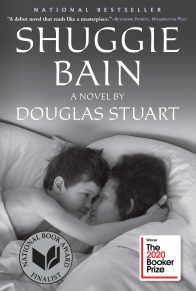
Shuggie Bain
Winner of the Booker Prize • Winner of the American Academy of Arts and Letters Sue Kaufman Prize for First Fiction • A New York Times bestseller • Finalist for the National Book Award • Finalist for the Kirkus Prize • Finalist for the National Book Critics Circle John Leonard Prize • Finalist for the PEN/Hemingway Award for Debut Novel • Finalist for the L.A. Times Art Seidenbaum Award for First Fiction • Shortlisted for the Center for Fiction First Novel Prize
Young Mungo
Finalist for the British Book Award • Shortlisted for Scotland’s National Book Award • Shortlisted for the Polari Book Prize • Longlisted for the Andrew Carnegie Medal for Excellence • Longlisted for the Dublin Literary Award • Longlisted for the Goldsboro Books Glass Bell Award • A New York Times Book Review Editors’ Choice
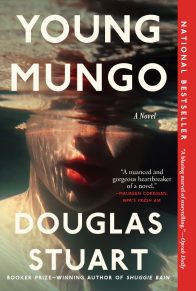
“Young Mungo seals it: Douglas Stuart is a genius . . . He’s capable of pulling the strings of suspense excruciatingly tight while still sensitively exploring the confused mind of this gentle adolescent trying to make sense of his sexuality”—Ron Charles, Washington Post
“We were bowled over by this first novel, which creates an amazingly intimate, compassionate, gripping portrait of addiction, courage and love. The book gives a vivid glimpse of a marginalised, impoverished community in a bygone era of British history. It’s a desperately sad, almost-hopeful examination of family and the destructive powers of desire.”—Booker Prize Judges, on Shuggie Bain
“The crafted storylines in Young Mungo develop with purpose and converge explosively, couching all the horror and pathos within a tighter, more gripping reading experience—an impressive advancement, in other words, from an already accomplished author.”—Sam Sacks, Wall Street Journal
“The tough portraits of Glaswegian working-class life from William McIlvanney, James Kelman, Alasdair Gray, and Agnes Owens can be felt in Shuggie Bain. . . This overwhelmingly vivid novel is not just an accomplished debut. It also feels like a moving act of filial reverence.”—James Walton, New York Review of Books
“The body—especially the body in pain—blazes on the pages of Shuggie Bain. . .The book would be just about unbearable were it not for the author’s astonishing capacity for love. He’s lovely, Douglas Stuart, fierce and loving and lovely. He shows us lots of monstrous behavior, but not a single monster. . . The book leaves us gutted and marveling: Life may be short, but it takes forever.”—Leah Hager Cohen, New York Times Book Review
“[A] bear hug of a new novel . . . Stuart oozes story. Mungo is alive. There is feeling under every word . . . This novel cuts you and then bandages you back up.”—Hillary Kelly, Los Angeles Times, on Young Mungo
“Shuggie Bain is a novel that cracks open the human heart, brings you inside, tears you up, and brings you up, with its episodes of unvarnished love, loss, survival and sorrow.”—Scott Simon, NPR’s “Weekend Edition”
“Stuart, with great subtlety, builds up an aura of tenderness in the relationship between helpless Shuggie and his even more helpless mother . . . By drawing Agnes and Shuggie with so much texture, he makes clear that neither mother nor son can be easily seen as a victim. Instead, they emerge forcefully; they are fully, palpably present.”—Colm Tóibín, Bookforum, on Shuggie Bain


 Grove Press