1. Set in small-town Germany, with a side trip to England and Belgium, this novel addresses universal issues of modern life: marriage, motherhood, family, sex, and death. Discuss whether seeing the world through the lens of a different culture highlights the commonality of the novel’s themes or whether it reduces them to the specific anguish of one woman in a distant town.
2. The novel’s action takes place over three consecutive days in the life of Elizabeth Kiehl, yet it spools back in time to encompass her life history. Talk about this narrative technique, in which Elizabeth’s present is so acutely connected to the events of her past that we as readers have to digest her present and past selves simultaneously. What effects does this have on the narrative? Is there room for the reader to reflect on Elizabeth’s evolution as a character?
3. Consider the use of the first-person narrative and the channeling of information through Elizabeth’s hyper-aware psyche. What are your feelings about Elizabeth as a person? Is it possible to enjoy the novel without liking or empathizing with Elizabeth as a character? Is it possible to see the narrative and Elizabeth as separate in any way?
4. It is clear from the opening pages—in which Elizabeth describes, in graphic detail, a sex session with her husband, Georg—that sex and sexuality will play a huge role in the narrative. Discuss how well this frank eroticism works within the scope of the novel. What does the physical act of sex mean to Elizabeth, and how does it help her to deal with the anxieties in her life? Is she ever able to truly turn off her own mental analysis of everything?
5. Consider the view of marriage that is portrayed in the novel and how far it differs from a traditional view of marriage and monogamy. Talk about the definition of a “good marriage.” How far do you think Elizabeth believes that hers is a “modern marriage,” and that she goes to brothels with Georg “for the sake of [her] husband, as a gift, a show of love” (p. 201). At what point does her need to be a perfect wife turn into the role of a submissive wife? How aware is she of this parallel?
6. Think about the ways in which the novel questions the roles of women within society and within marriage. Talk about the novel as a cry for female empowerment, a feminist manifesto.
7. Central to the book is Elizabeth’s need to be a perfect wife, perfect mother, and even a perfect patient for her therapist. Consider why this is so important to her, and talk about the ways in which she attempts to achieve her aims.
8. “I want to be the coolest wife my husband can possibly imagine. I want him to have that because he’s given me so much. Everything he has, he shares with me. Money, time, his apartment. Everything” (p. 70). When Elizabeth states her reasons for agreeing to visit brothels with her husband, is it hard to see their marriage as anything other than a transaction of some kind? If analyzed deeply, is marriage always a transaction at its root?
9. “I want her to have the luxury of wanting to go out into the world because life at home is so boring” (p. 23). Consider Elizabeth’s hopes for her daughter, Liza, and her reasons for them. Do you think it is possible for Elizabeth to succeed in her mission by controlling her own life—and her daughter’s—so much? Is there a sense of irony in the ennui of her home life?
10. What does Elizabeth mean when she states, “I am the sum of all my parents’ mistakes” (p. 83)? What were their mistakes and how did they affect her? What kinds of mistakes do you see her making as a mother?
11. Talk about the role of therapy in the novel. Elizabeth reveals that she tries “to clean up [her] messy psyche for the sake of a healthy future together, as a family and as a couple” (p. 52). Do you agree that this is necessary for Elizabeth? Do you think that therapy is helping her, or do you see her trying to become someone other than herself? Should her family members be willing to accept her messy mental state?
12. A tragic car accident, in which Elizabeth’s three brothers were killed but her mother survived, lies at the center of the novel—and of Elizabeth’s psyche. Did you get a real sense of Elizabeth’s character before the accident and of how the accident changed her? Or was it enough to know that she went through this defining moment and that it irretrievably changed her?
13. Talk about the ways in which the accident changes Elizabeth’s relationship with her mother. She states that she and her mother were close. “Fatally close. I was never able to create space from her as an adult—my options were limited to being close to her or having no relationship with her at all” (p. 111). What are her reasons for cutting herself off from her parents? What is the irony of Frau Drescher’s comment that “you can only get away from them physically” (p. 45)?
14. The themes of death and love are often interconnected throughout the narrative. Consider the ways in which death seems to appear at the beginnings and ends of relationships, and why this might be the case. Talk about the way Elizabeth’s extended family responds to the death of her brothers, and the way their deaths affects her relationship with her then husband-to-be, her mother, and her father. Also discuss Elizabeth’s obsessive relationship with her will and her thoughts of suicide. Why does she cling to life?
15. Discuss the ways in which Elizabeth’s neurotic lens heightens the tensions of the most ordinary, mundane domestic details until, for example, a case of worms becomes a thing of universal anguish. What do you think the author might be saying about our modern occupation with malaise and fear?
16. Elizabeth seems to spend much of her time taking advice from others—from magazines, books, her therapist—on how to live her life, raise her daughter, and pleasure her husband. How does this overly conscious life affect her? Is she ever able to live without thinking through each moment? Even during sex?
17. We learn more about the therapist Frau Drescher than any of the other characters in the novel. Do you feel that Frau Drescher plays any role other than that of a stylistic device, a means of getting inside Elizabeth’s head?
18. Elizabeth’s voice, her detailed description of these three days in her life, fills our heads so that we know her every thought and action. Ultimately, does Elizabeth have any sense of self, or is she defined entirely by her desire to please other people? When she states, “I would subvert my own identity if doing so would fulfill the desires of others—people like my husband, my therapist, my child, the neighbors, my friends,” do you not get the idea that she has already done this (p. 173)? If not, explain what remnants of her still exist.
19. Look for traces of humor throughout the novel, for glimpses of Elizabeth’s awareness of her own predicament, of her own over-analysis of her life. Does she ever regard her situation with levity?
20. “I pat myself on the shoulder mentally, since once again I’ve done something good for my mental health, for the well-being of our family, . . . the well-being of my marriage” (p. 187). Elizabeth seems to believe that the happiness of others is dependent on her. Talk about some of the reasons for this and the ways that she has created and perpetuated this situation.
21. Georg states, “You want to control everything, even things that can’t be controlled” (p. 283). Do you think he is right about her?
22. What are your hopes for Elizabeth by the end of the novel? How far do you empathize with her? Do you see her entire narrative as a cry for help or do you think she is carving out her own identity? In the novel’s concluding pages, Georg suggests that he would be fine with his wife sleeping with their neighbor. Elizabeth views this as a triumph. Do you agree with her on this, or could this be another step on a downward spiral into submission?
Suggested Further Reading:
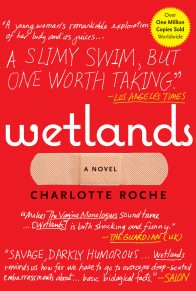
Wetlands by Charlotte Roche; Witches on the Road Tonight by Sheri Holman; The Sexual Life of Catherine M. by Catherine Millet; and various books by Kathy Acker.


 Black Cat