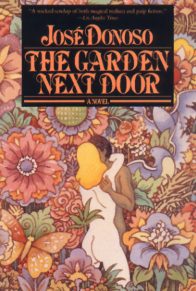
1. José Donoso’s novel Curfew was titled La desesperanza [Hopelessness] in Spanish. Discuss the relevance of both titles to the plot of the novel, and to the political questions of a Chile still under Pinochet’s dictatorship. What do the titles convey to the reader of a novel about Pinochet’s Chile?
2. While Curfew is fiction, the reader cannot ignore the historical, literary, and political setting of the novel in Chile in 1985, or the biographical affinities between Ma”ungo Vera and José Donoso. Consider why Donoso may have set his novel during Matilde Urrutia’s (Pablo Neruda’s widow) funeral (1985). What are the similarities between Mañungo and Donoso? How does Donoso simultaneously make a pronouncement and evade his own opinions on Pinochet’s government?
3. In Curfew, several political factions reunite at Matilde Urrutia’s wake and funeral. Discuss the loyalties of Ma”ungo, Judit, Lopito, Lisboa, Ada Luz, Don C’sar, Don Celedonio, and Fausta Manquilea. Why does Donoso present so many different classes, ideals, and political affinities in contact with one another? What effect does the varied perspective on revolution have on the reader?
4. Donoso divides Curfew into three parts, “Dusk,” “Night,” and “Morning,” that take place over a period of twenty to twenty-four hours. What transformations do the protagonists Judit and Mañungo undergo in the brief period of one day? How do the titles of the chapters reflect the nature of those transformations? Why might Donoso have left out a fourth part called “Day”?
5. Judit’s mission is to avenge her and her friends’ captors and torturers. However, the reader discovers that Judit’s experience in prison is not the same as that of Ada Luz, Auristela, Domitila, and Senta. How do their experiences differ? To what does Judit owe her deferential treatment by her torturers? What is the psychological explanation behind Judit’s vengeance? What is the social justification of her vengeance? In which episodes do we see Judit’s responding to her (in)experience in prison?
6. Mañungo Vera became famous in Paris as a revolutionary singer who expressed Chile’s political injustices in rock-and-roll songs. What has become of Ma”ungo’s career in Europe by the mid-1980s? How is Mañungo received when he sings ‘Santiago Ensangrentado’ [Bloody Santiago] at Matilde Urrutia’s funeral? Why have the European and Latin American audiences abandoned him?
7. Mañungo and Judit must sneak around Santiago when they are outside after curfew. Who else is on the streets after curfew? How does Donoso portray Santiago’s underground society? How do Ma”ungo and Judit interact with and react to the other street dwellers?
8. Why do Mañungo and Judit go to Ricardo Farías’s house? How does Judit use her sexuality to gain entry? How does she exploit Mañungo’s celebrity? How does Judit react when Ricardo and Liliana ignore her? Why?
9. Discuss the scene of the gang rape of the white dog. Why does Judit identify with the white dog? Why does she kill the white dog? Why does she sleep hugging the dead dog? What does Judit realize about her experience in prison after having mourned the dead dog
10. During Matilde Urrutia’s funeral, Mañungo and Judit visit her family mausoleum. How do Judit’s family’s burial rites differ from that of Mañungo’s mother, and that of the victims of Pinochet’s government? Why does the visit to the mausoleum change Judit’s mind about fleeing to Paris with Mañungo? Why does it change Mañungo’s mind?
11. At the end of the funeral, Lopito’s daughter, Lopita, tap dances, and the policemen laugh at her. Lopito responds by assaulting the officers, and as a result, he ends up in prison. What do Mañungo and Judit do to try to save Lopito? What is the result? What do we learn about free speech in Pinochet’s Chile? Why can neither one of them become a martyr for a revolution?
12. At the end of the novel, Mañungo meets up with his son, Jean Paul, Lopita, Marilé, Fausta, and Celedonio at an amusement park that re-creates Chile in miniature scale. Why does Mañungo go to the amusement park? Why does Judit decide not to join the others at the amusement park? How do Mañungo and Judit’s actions at the end of the novel reflect their reevaluation of their roles in Pinochet’s Chile? How does the amusement park reflect back on the structure and perspectives of Donoso’s novel?


 Grove Press