FRAUD ALERT: Professional scammers are impersonating Grove Atlantic staff, offering contracts under false pretenses. If you are contacted, or need to verify any communication, please call us at 212-614-7840.

News Room

Pride Q&A with Dennis Cooper, Oliver Radclyffe, Rabih Alameddine, and Tom Ryan
Pride Month is a great time to reread favorite gay classics, discover new-to-you authors, and explore queer stories. But who are the authors behind those stories? To help you get to the bottom of that, we rounded up Dennis Cooper, author of the award-winning and highly controversial George Miles Cycle, Oliver Radclyffe, author of Frighten the Horses, Rabih Alameddine, award-winning author of The True True Story of Raja the Gullible (and His Mother), and Tom Ryan, author of We Had a Hunch, to ask them all of our burning questions.
If you were to write a book about one queer icon, who would it be?
DC: I’ve always thought someone should put together an oral biography of the poet Tim Dlugos. He was a major force of gravity in the writing, art, fashion, music, social and lowlife scenes in NYC in the 1980s who seemed to know everyone who was fascinating. Unfortunately, a lot of the people he knew are dead or in their twilight years, so it might be a little late, but it would be a very interesting and inspiring book.
TR: I’m kind of obsessed with Truman Capote. Famously witty, notoriously nasty, and one of the greatest writers of the twentieth century, he was visibly queer and ahead of his time in many ways. I think he’d make a great (obviously highly fictionalized) character in a mystery series. It’s a wacky idea, but be honest, can’t you kind of imagine it?
There is a lot of online discourse about happy queer stories vs. sad ones. When do you find yourself reaching for either?
OR: I’m less interested these days in reading happy queer stories if I feel like they’re just trying to fit into the “trans joy” trope. I understand the desire to move away from the historical focus on the trans trauma plot, but I think there’s a space in between the two which is much more interesting. Nowadays you’re much more likely to find me reading literary fiction about the lives of characters after they’ve transition, such as Afternoon Hours of a Hermit by Patrick Cottrell, an irresistibly funny and incredibly smart novel about a self-styled trans detective which I couldn’t put down.
What have you read recently that you think everyone should know about?
RA: I loved The Hairdresser’s Son by Gerbrand Bakker (translated by David Colmer), a slow-burn delight of a novel. I have little in common with the main protagonist, Simon—well, nothing other than being gay, lonely, middle-aged, grumpy, single, slightly misanthropic with mother issues. Other than that, nothing. Simon is a hairdresser, just like his father who died before he was born, and his grandfather before him. The novel shows us Simon living his life—honing razors, polishing mirrors, sweeping discarded hair—an ordinary life filled with wonder. The subtlety with which the reader comes to see Simon’s loneliness and desperation is magical. Oh, and the sexual interest part of the novel is truly creepy!
DC: If you mean among queer and queer-adjacent books, Kay Gabriel’s Perverts, Sasha Hawkins’ For Disobeying, Francis Whorrall-Campbell’s The Revolution Will Not Have Been Downloaded, Hesse K’s Disquiet Drive, Ronald M. Schernikau’s SmallTownNovella, and Nathan Kernan’s A Day like Any Other: The Life of James Schuyler off the top of my head.
OR: The queer historian Hugh Ryan’s latest book, My Bad, is coming out this week. Hugh came of age during the early days of the internet in the 90s, so this is a nostalgic ride through an era when homophobia was still rampant and largely culturally endorsed. Because he writes with one eye on history, this is an incredible record of what it was like to be genderqueer identity in the time before we were all being surveilled by our own cellphones. It’s wild, chaotic, page-turning, heart-breaking, occasionally jaw-dropping, and imbued throughout with Hugh’s fabulous sense of humor.
TR: I loved A Queer Case by Robert Holtom. As queer as the title implies, it’s a whodunnit featuring Selby Bigge, a closeted young gay man living, loving and cruising in the shadows of 1920s London. It’s tremendously fun and really well written, features some great characters, and the mystery at its heart is well plotted and satisfying. I was thrilled to learn it’s the first in a series!
What is a piece of media that you feel was pivotal in discovering and accepting your queer identity?
DC: There wasn’t a lot of media back when I discovered my queerness. Probably books. Probably reading Arthur Rimbaud in my early teens.
Do you have any advice for readers who may be starting to explore their own queerness?
RA: Go for it!
DC: Embrace it as the huge advantage it is and avoid others’ attempts to ‘normalize’ you at all costs.
In honor of Pride, what is something you’ve done recently that you’re proud of (that you can talk about)?
DC: Just ongoing pride that I can do the only thing I’m good at doing and that people seem interested in it.
How has your queer identity shaped what you write about?
OR: The reason I wrote my first book in my forties is because I came out so late, and it’s hard to write honestly when you’re deep in denial about who you are: even when you’re writing fiction, you’re still digging inside yourself to get to the truth. I’m currently working on a novel, and have found that since I’ve inhabited so many identities at different stages of my life (straight woman, lesbian, nonbinary person, trans man) I can see the world from multiple character viewpoints. So maybe the slightly chaotic route I took to find myself is finally working in my favor!
What do you hope to see more of in queer stories, both fiction and nonfiction, in the future?
TR: Selfishly, I would love to see more queer characters and stories in the crime fiction space, since those are the kinds of books I write and love to read. There are so many great mysteries and thrillers coming out from queer writers, featuring wonderful LGBTQ+ characters and storylines, but there’s always room for more!
What are your plans for Pride?
RA: I’m afraid I’m too grumpy for Pride. In the early eighties, I marched in the parade with my gay soccer team for about ten years. I’ve served my time, fulfilled my homobligation. These days, I lock myself at home, emerging only when the coast is clear.
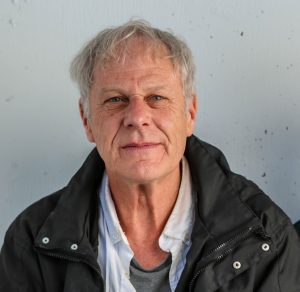 Dennis Cooper is the author of the George Miles Cycle of five novels, of which Closer is the first. He is also the author of My Loose Thread, The Sluts, God Jr., and The Marbled Swarm. Cooper’s other works include story collections, poetry, and the essay collection Smothered in Hugs. He divides his time between Los Angeles and Paris.
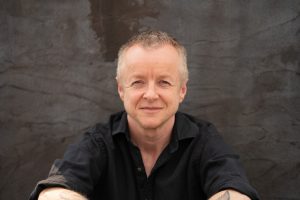 Oliver Radclyffe is the author of Frighten the Horses published by Roxane Gay Books, and Adult Human Male published by Unbound Edition Press. His work has appeared in the New York Times, Los Angeles Times, The Guardian, Electric Literature, The Gay & Lesbian Review, Literary Hub, PRINT Magazine and Them. Born in the UK, he currently lives on the Connecticut coast.
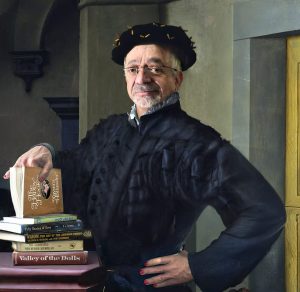 Rabih Alameddine is the author of the novels The Wrong End of the Telescope; Angel of History; An Unnecessary Woman; The Hakawati; I, the Divine; Koolaids; the story collection, The Perv; and one work of nonfiction, Comforting Myths. He has won the PEN/Faulkner Award for Fiction and was a finalist for the National Book Award. He received the Dos Passos Prize in 2019 and a Lannan Award in 2021.
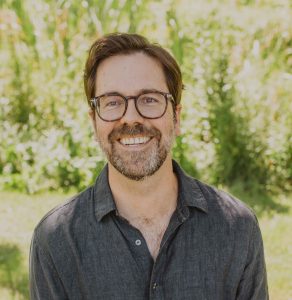 Tom Ryan is an internationally bestselling, award-winning author, screenwriter and producer. His adult mystery debut The Treasure Hunters Club (2024) was an instant USA Today, Globe & Mail, and Toronto Star bestseller and a 2025 Edgar Award nominee. His YA mystery Keep This To Yourself (2019) was the winner of the 2020 ITW Thriller Award for Best YA Thriller, and his follow-up YA mystery I Hope You’re Listening (2020) was the winner of the 2021 Lambda “Lammy” Award for Best LGBTQ Mystery.